Home / Conveyors & transfers
Zones, transfers, inclines. Moved without a push.
Conveyor line C1 carries totes and boxes on motor-driven roller zones that keep a gap between items, turns them through a 90° transfer and lifts them up a 12° belt incline to a high-level line, all run from one control cabinet. For parcels, add a six-sided scan tunnel and a swivel-wheel sorter (below).
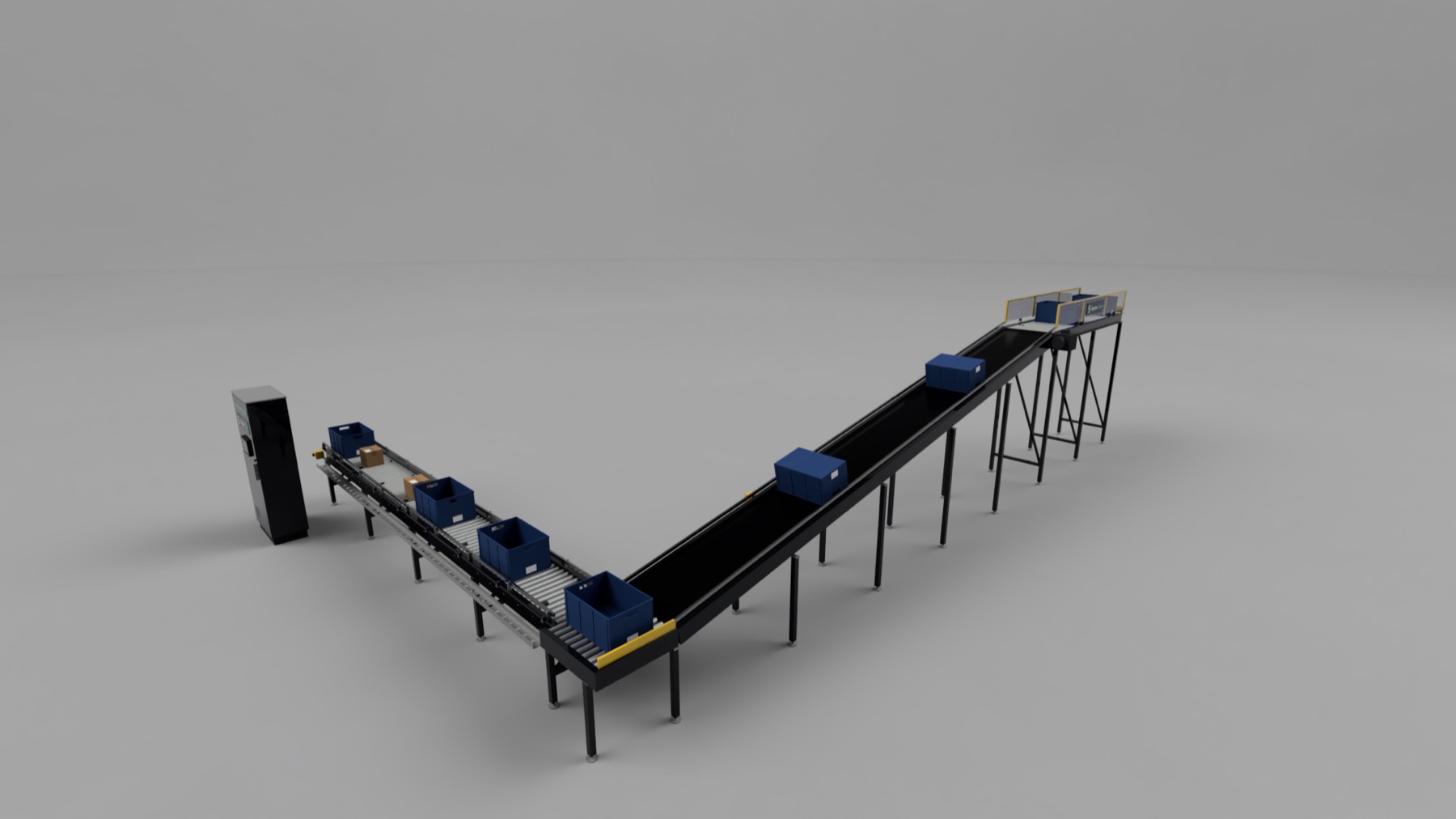
What the line in the picture does.
Each roller zone has its own motor, so items wait in their zone instead of pressing on the one in front. The 90° transfer turns items onto the cross line, and the belt incline lifts them 1.5 m to a high-level conveyor. Guards cover nip points, and the high section needs side guards or catch mesh over walkways.
- Line length
- 16.9 m
- Roller zones
- 12, each with its own motor
- Incline
- 12°, up to 2.3 m
- Design rate
- 1,200 items/h
- Items
- up to 600 × 400 × 300 mm, 30 kg
Concept · 3D design Figures are design calculations from the Fusion model. No physical testing yet; ratings are published only after testing.
Scan every face. The wheels steer.
For parcel sites, a six-sided scan tunnel reads the label and a swivel-wheel diverter sends each parcel straight on or 30 degrees onto a side conveyor. This interactive engineering model shows that parcel line.
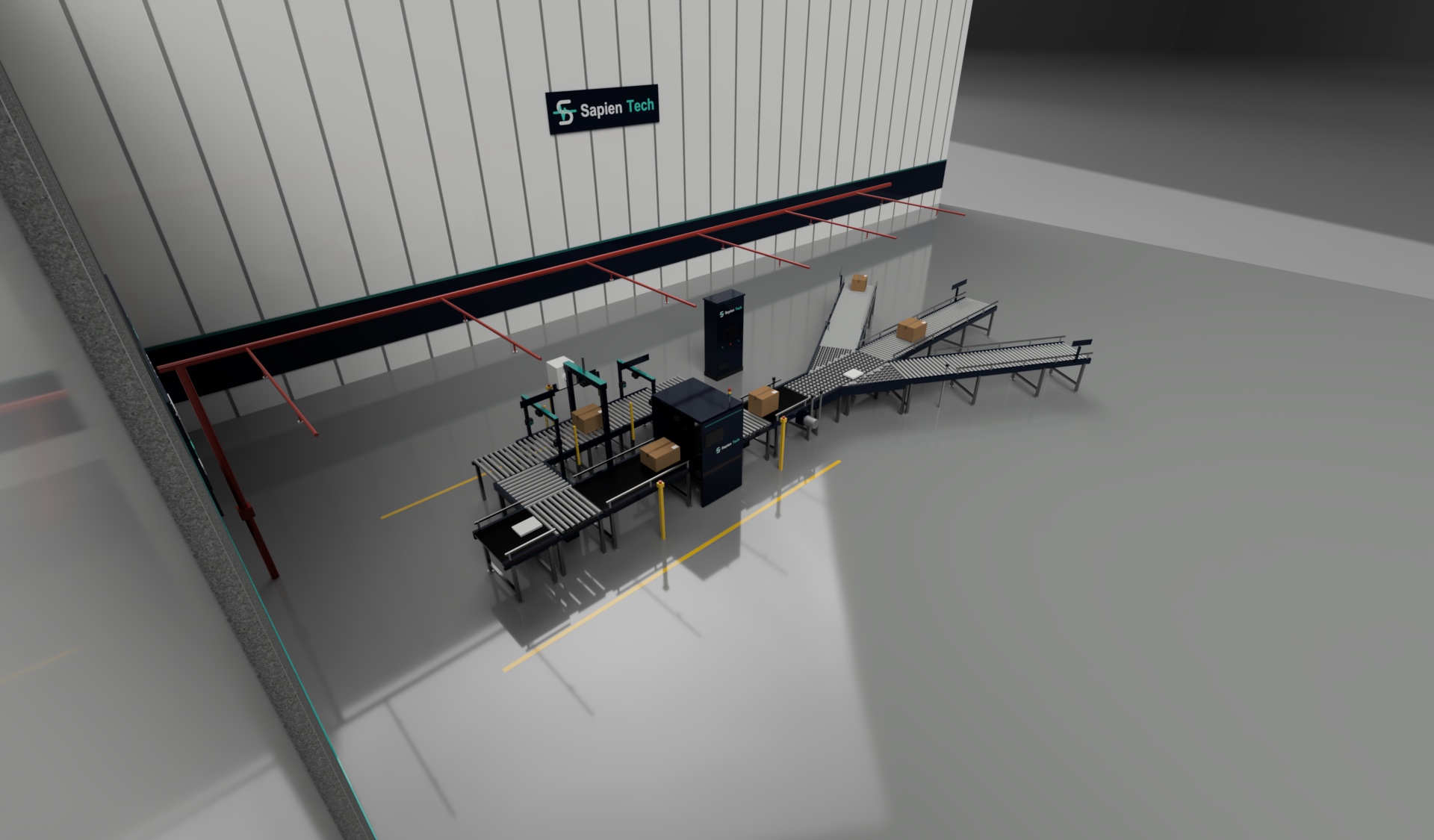
- Scan. The six-sided tunnel reads the label on any face, including underneath. A damaged label is relabelled automatically on the exception lane.
- Swivel. All wheel rows pivot together, straight or 30 degrees.
- Gentle. The wheels steer the parcel. Nothing pushes or hits it.
- Proven parts. Belts, rollers, photo-eyes and a control panel, as on any modern site.
Read every face. Never turn a parcel over.
Cameras above, at both sides, at the front and back, and one underneath read the label wherever it is. The bottom camera looks up through a 30 mm gap between two belts, so a face-down label is read first time. Nothing is flipped, so mailers and fragile items are not handled twice.
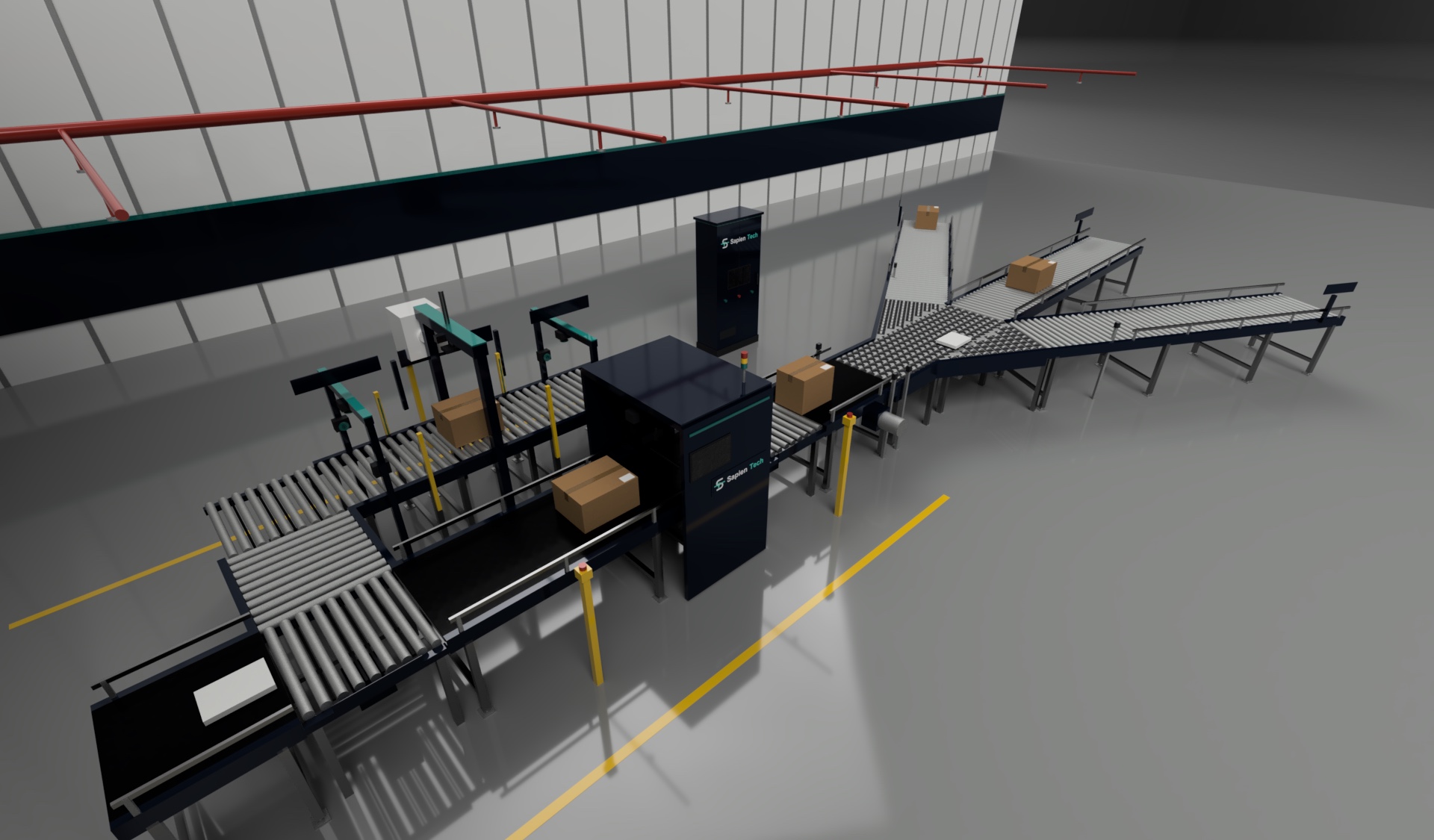
- 1. Six-sided read. Top, side, front, back and bottom cameras read the label on any face at line speed.
- 2. Label underneath? The bottom line-scan camera reads it through the gap between the two tunnel belts. The parcel sorts as normal.
- 3. Label damaged or missing. The tunnel light flashes red and the screen says "LABEL DAMAGED". The line does not stop.
- 4. Out. A pop-up transfer lifts the parcel sideways onto the exception lane.
- 5. Identify. Camera 1 photographs and measures it. The WCS matches it to its order from the readable part of the label, the photo, size and weight.
- 6. Relabel automatically. A print-and-apply labeller prints a new label and presses it onto the top of the parcel.
- 7. Verify and return. A verify camera reads the new label, then a transfer merges the parcel back onto the infeed in a free gap.
- 8. Second pass. The tunnel reads the new label and the parcel sorts as normal. No operator is needed on the line.
Six-sided reading replaces the earlier flip station: nothing grips or turns the parcel. A parcel the WCS cannot match to an order is held at the end of the exception lane and flagged on the dashboard. Exception and match rates depend on label quality and order data, and are confirmed in testing.
The parcel line in the engineering model.
The swivel-wheel sorter, the infeed and the six-sided scan tunnel, rendered from the Fusion design model.
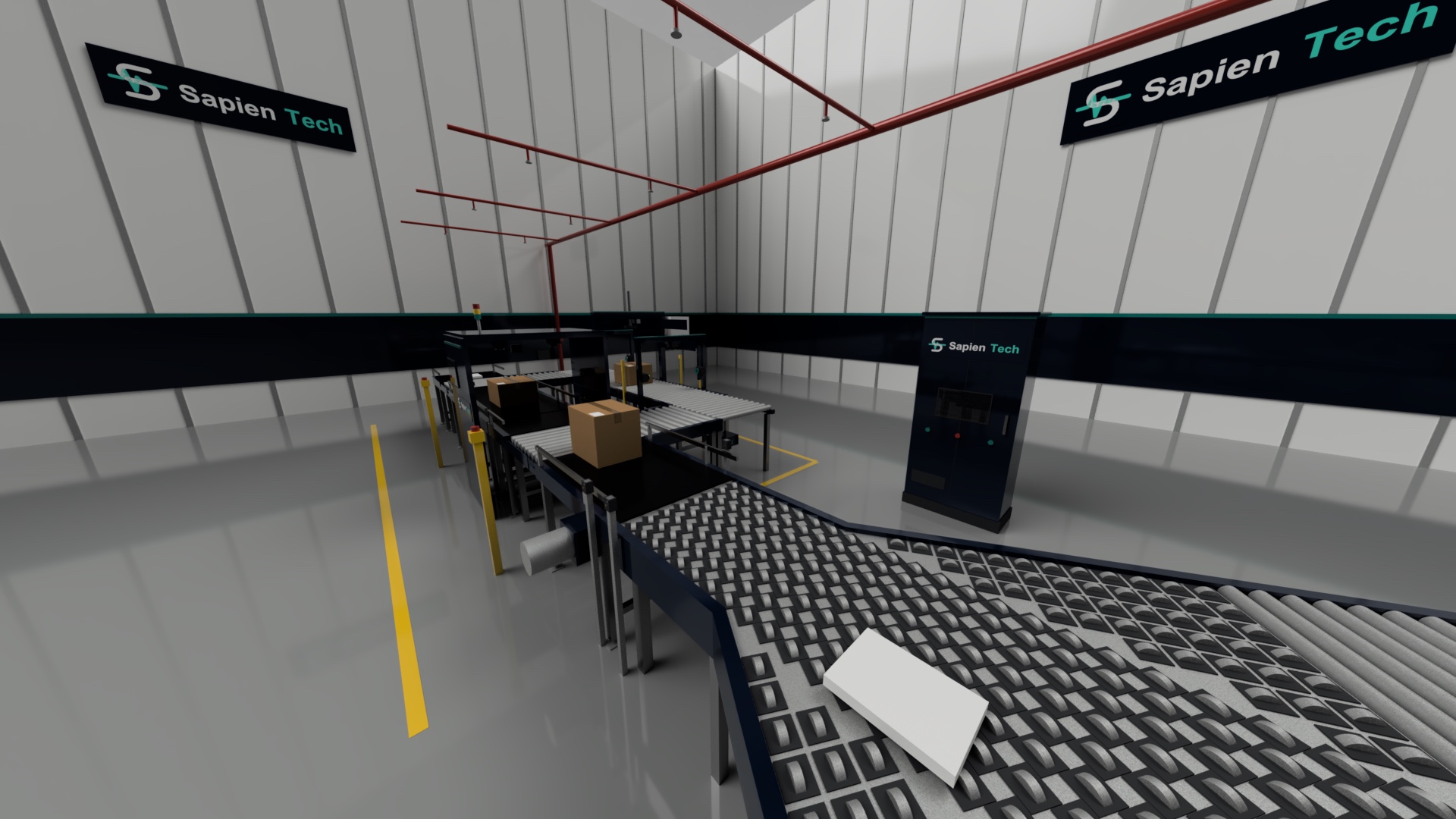
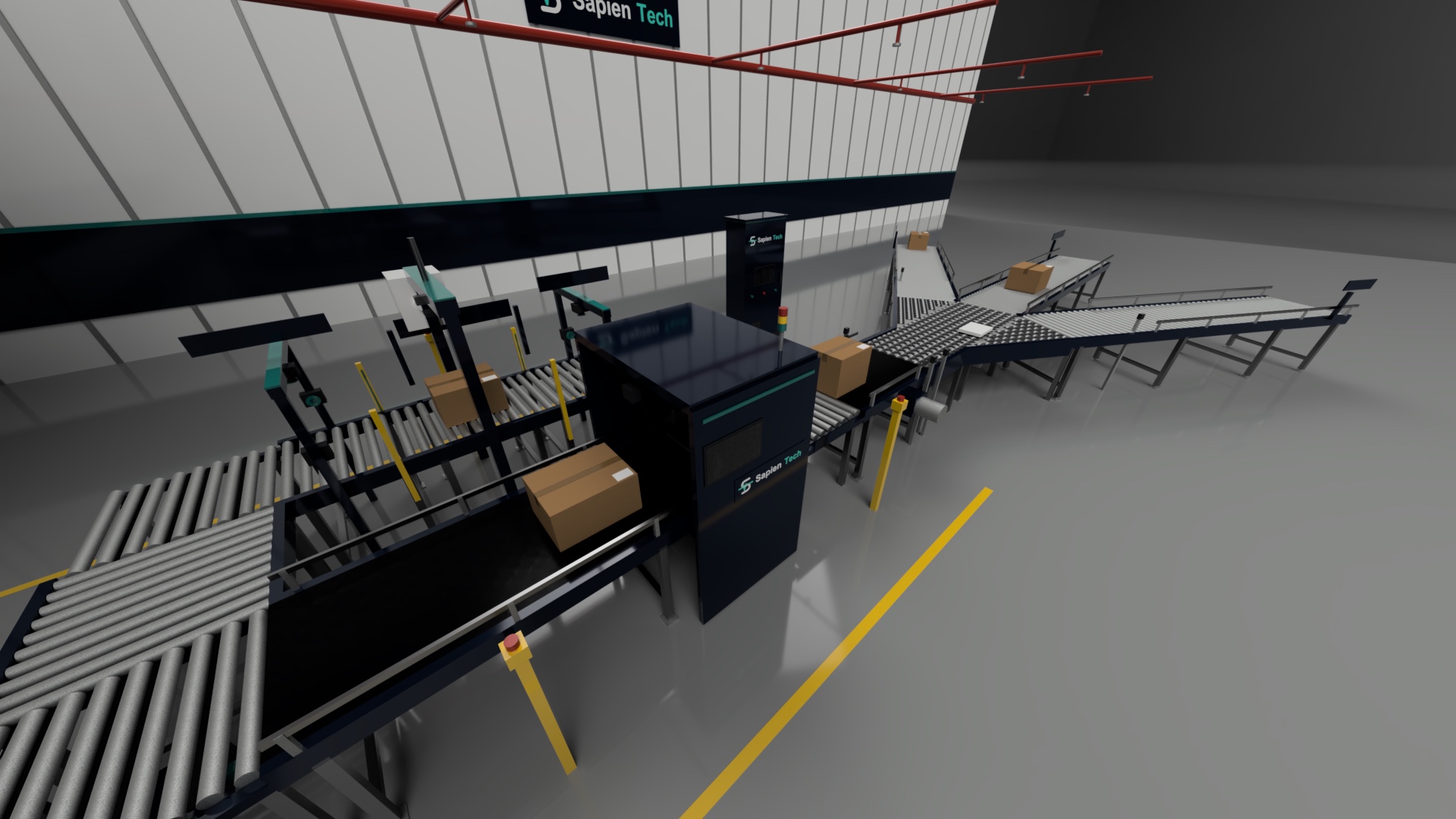
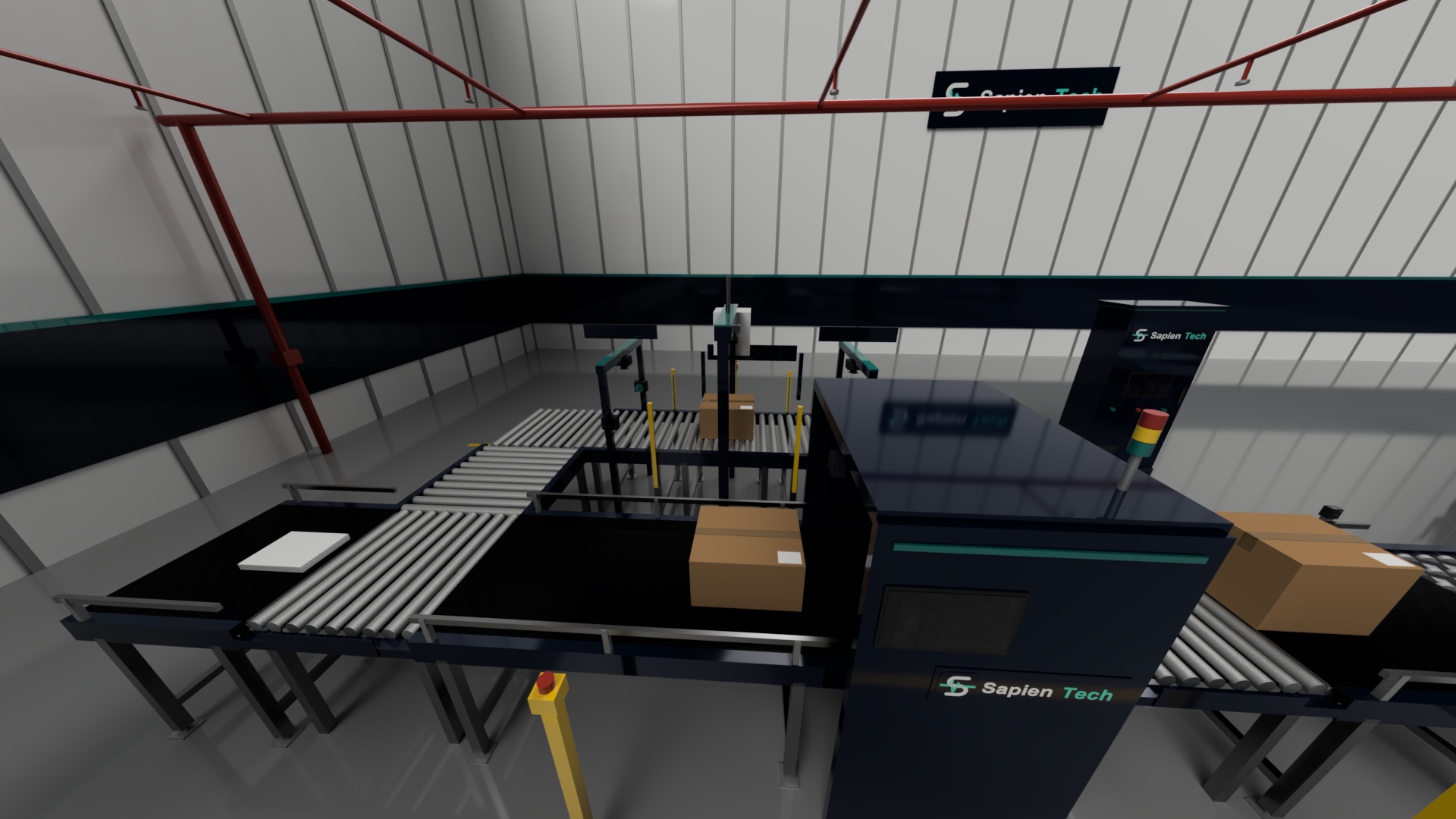
Concept · 3D design No physical testing yet; ratings are published only after testing.
Start with what must connect.
We build the layout around your parcels, rates and space.
Material flow
Where goods arrive, divide, queue and leave.
Parcel range
Smallest and largest parcels, weights and packaging.
Controls
Scanning, sorting rules, fault recovery and access.
What it should do.
Each number says where it comes from.
Belt and roller speed. Parcels, rollers, wheels and arrows all move at this speed.
Our design targetWhat the 3D model runs: one parcel every 1.2 s at 2 m/s.
Our calculationSwivel-wheel sorters on the market, at 1.8 m/s.
Industry benchmarkDivert angle onto each side lane.
Our design targetRead rate a market bottom-side barcode reader claims. We use a bottom camera so face-down labels are read first time.
Industry benchmarkBenchmarks are makers' own published figures, not independent tests. Our targets are not yet measured. Sources: FMH swivel divert unit · Cognex DataMan 470 bottom-side reader.
Conveyor questions.
Is the diverter for sale?
Not yet. It is in development. Standard conveyor modules can be designed for your site now.
Can it sort more than three ways?
Yes. More diverters can be added along the line. We design the layout around your flow.
Can Predict watch the conveyors?
Yes. Predict nodes and BeltWatch can be built in from day one.
The numbers in one place.
Design and target values for this machine. None are tested yet unless marked Market. On a phone, swipe the table sideways.
| Item | Value | Type |
|---|---|---|
| Belt and roller speed | 2 m/s | Target |
| Rate in the 3D model | 3,000 parcels an hour (one every 1.2 s) | Model |
| Conveyor width | 800 mm | Design |
| Divert | Swivel wheels, straight on or 30° left or right | Design |
| Scanning | Six-sided tunnel: top, sides, front, back and a bottom camera under a 30 mm belt gap | Design |
| Face-down labels | Read first time by the bottom camera; no flipping | Design |
| Damaged or missing labels | Automatic: order match, print-and-apply labeller, verify camera, merge back for rescan | Design |
| Safety | E-stops along the line, light curtains at the labeller, guards | Design |
| Fire safety | Ceiling sprinkler branches over the whole line | Design |
Tell us about your loads and flow.
Share parcel sizes and weights, rate per hour and your layout.