Home / Robotic truck loading
The robot empties the trailer. People stay on the dock.
A telescopic belt boom reaches the full length of a 13.6 m trailer. A robot head on its nose sees the wall of cases with 3D cameras and takes them with a vacuum gripper, top layer first, straight onto the belt. Nobody works inside the trailer while it runs. At the next door, a 6-pallet pack drives in and out on its own.
Two docks, two kinds of load.
Dock 1 unloads loose cases with a robot head on a telescopic boom. Dock 2 loads and unloads whole pallets with no forklift. The interactive model shows our earlier dock 1 concept, a mobile robot inside the trailer feeding an expandable conveyor; the design in the main image puts the robot head on the boom.
The 3D model runs faster than real life so the whole cycle fits in about half a minute.
Dock 1 · boom and robot head (D1)
- 1. Reach in. The telescopic boom extends over the dock leveller into the trailer, up to 13.5 m. A light curtain at the door keeps people out while it runs.
- 2. See the wall. 3D cameras on the robot head map every case face.
- 3. Top layer first. The arm picks the highest case, so nothing falls.
- 4. Grip. Vacuum cups hold the case by its face and let go on the boom belt.
- 5. Ride out. The case rides the boom belt into the building, one case at a time, with gaps.
- 6. Next slice. When a slice is clear, the boom extends further. Beyond about 5.4 m a nose bogie supports the head on the trailer floor.
Dock 2 · automatic pallet loading
- 1. Form the pack. Six EUR pallets arrive one by one on a floor-level chain conveyor: 3 across, 2 deep.
- 2. Drive in. The chain and the trailer's moving floor run together. The whole pack goes in at once.
- 3. Unload the same way. The moving floor brings a pack out onto the chain, and pallets leave one by one.
- 4. No forklift. No one drives in or out of the trailer.
Better than a person on a boom.
A plain boom conveyor still needs a person in the trailer lifting every case. Our robot head does the lifting from the end of the boom.
- No heavy lifting. Trailer unloading is hot, heavy, repeated work. The robot takes it.
- Steady rate. The same pace on every shift. The market leaders quote 800 to 1,600 cases an hour.
- Gaps built in. Cases leave one at a time with space between them, so the sorter and scanner read every one.
- One case size rule. The model uses a 600 × 400 mm case footprint. Tote storage receives totes, not loose cases; contents must fit the tote after decant.
- Safety design. Area scanners, emergency stops and guarding are proposed. Protective fields, stopping performance and access need project-specific validation.
- Data. Every case is counted and checked against the delivery note in our WCS.
Easy to fix. A plan B at every dock.
Recovery options aim to reduce dock downtime. Availability depends on the fault, remaining equipment and approved working method.
- Quick-swap gripper. The cup plate comes off with 2 clamps. Cups are a push-fit spare.
- Mains powered. The boom and robot head run from the dock supply, so there are no batteries to charge between trailers.
- Swap the head. The robot head is a module on the boom nose. A spare head can be fitted while the faulty one goes to the bench.
- Manual fallback. An independent conveyor may support a planned manual fallback, subject to isolation of the robot and an approved handling method.
- Predict built in. Our sensors watch drive motors, vacuum pumps and bearings for early wear.
- Pallet dock fallback. Forklift fallback requires a compatible trailer and an approved, segregated loading method.
The numbers in one place.
Design and target values for this machine. None are tested yet unless marked Market. On a phone, swipe the table sideways.
| Item | Value | Type |
|---|---|---|
| Unload rate | 1,000 cases an hour | Target |
| Case sizes | 600 × 400 mm footprint, 200 / 300 / 400 mm high, plus 600 × 400 × 280 mm totes | Design |
| Max case weight | Up to 23 kg | Target |
| Boom reach | 13.5 m telescopic belt boom, nose bogie support beyond about 5.4 m | Design calculation |
| Head reach | Top of a 2.7 m high trailer to the floor | Design |
| Gripper | 12 vacuum cups on a quick-swap plate | Design |
| Vision | 3D cameras on the robot head | Design |
| Safety | Door light curtain (nobody in the trailer while running), e-stops at the boom base and the head, guarded nip points | Design |
| Pallet dock | 6 EUR pallets (1200 × 800 mm) per pack, chain conveyor + trailer moving floor | Design |
| Standards we design to | ISO 12100, ISO 10218-1/-2 (robot head), EN 619 (telescopic boom), EN ISO 13849-1, EN 60204-1 | Design |
What the market does today.
Each number says where it comes from.
Boston Dynamics Stretch, as quoted at launch.
Industry benchmarkMujin TruckBot, cases up to 22.6 kg.
Industry benchmarkPickle Robot average, with a peak near 1,800.
Industry benchmarkJoloda moving floor: a whole trailer loaded or unloaded.
Industry benchmarkOur target for one robot. Not tested yet.
Our design targetOur pallet pack in the 3D model: 3 across, 2 deep.
Our design targetMarket numbers are makers' own published figures. Our numbers are design targets, not tested yet. Benchmarks are makers' own published figures, not independent tests. Our targets are not yet measured. Sources: Boston Dynamics Stretch moves 800 cases per hour (Food Manufacturing) · Mujin TruckBot (The Robot Report) · Pickle Robot (IEEE Spectrum) · Joloda moving floor.
Three things we need to know.
We size the robots and pallet docks around your trailers and loads.
Trailers
Lengths, heights, and which ones have a moving floor.
Loads
Loose cases or pallets, case sizes and weights, trailers per day.
Link
Where the cases go next: sorter, tote storage or a pick area.
Truck loading questions.
Is it for sale?
Not yet. It is in 3D design. We can plan it into your dock layout now.
What about mixed, messy loads?
The cameras see each case. Odd items are flagged and set aside for a person. Our target is cases with a flat face up to 23 kg.
Does it need a special trailer?
No. The boom reaches into a normal 13.6 m trailer. Trailer floors vary, so we confirm wheel loads for the nose bogie with the haulier. A moving-floor trailer is only needed for the 6-pallet pack dock.
Can people work nearby?
Nearby work requires assessed separation and validated protective measures. A painted line alone is not a safeguard; protective fields and stopping distances must be verified for the task.
Does it link to the rest of the site?
Yes. Cases are planned to feed the sorter or AMRs; suitable items are placed into standard totes at decant before tote storage. WCS coordination remains in development.
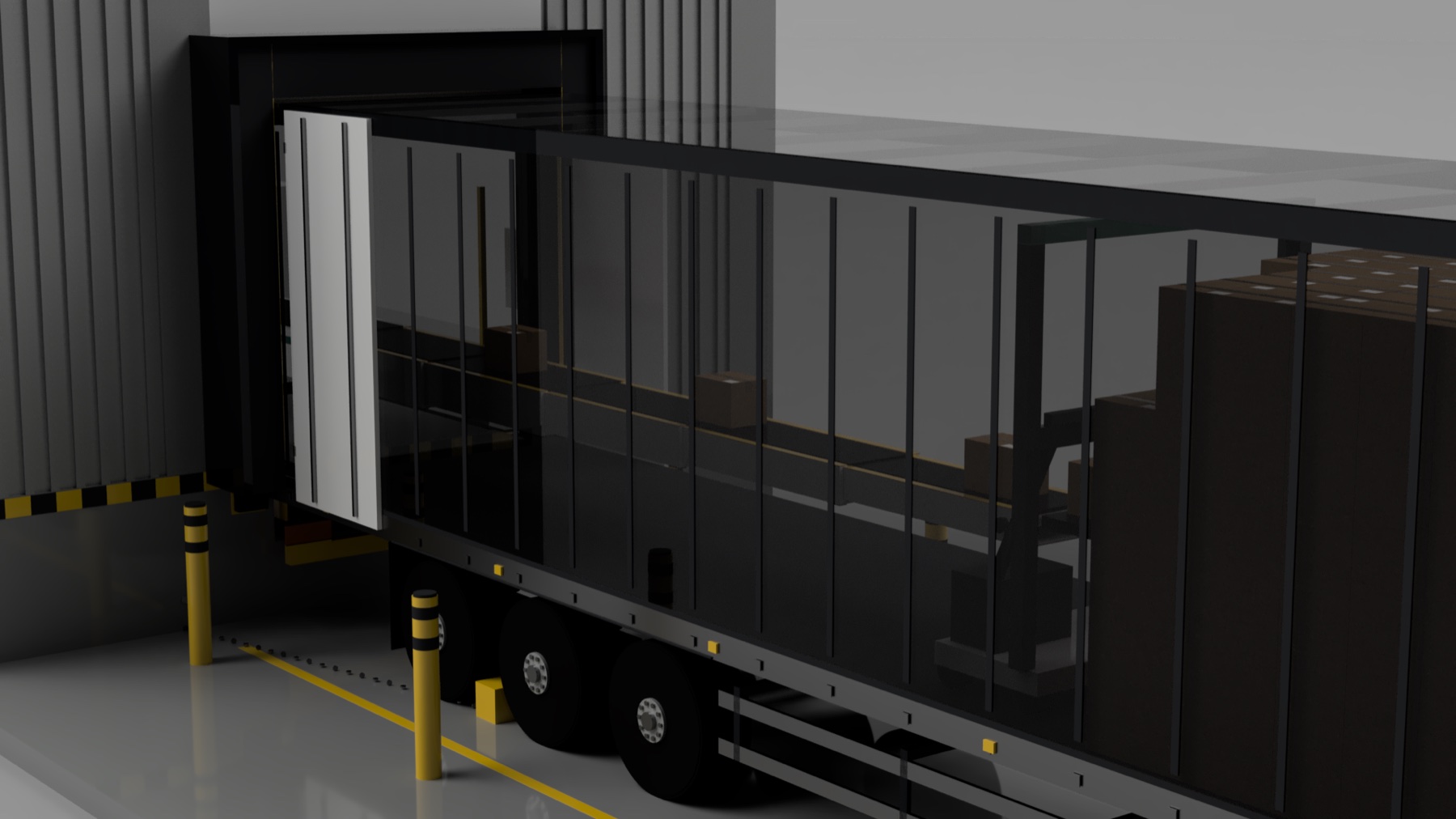
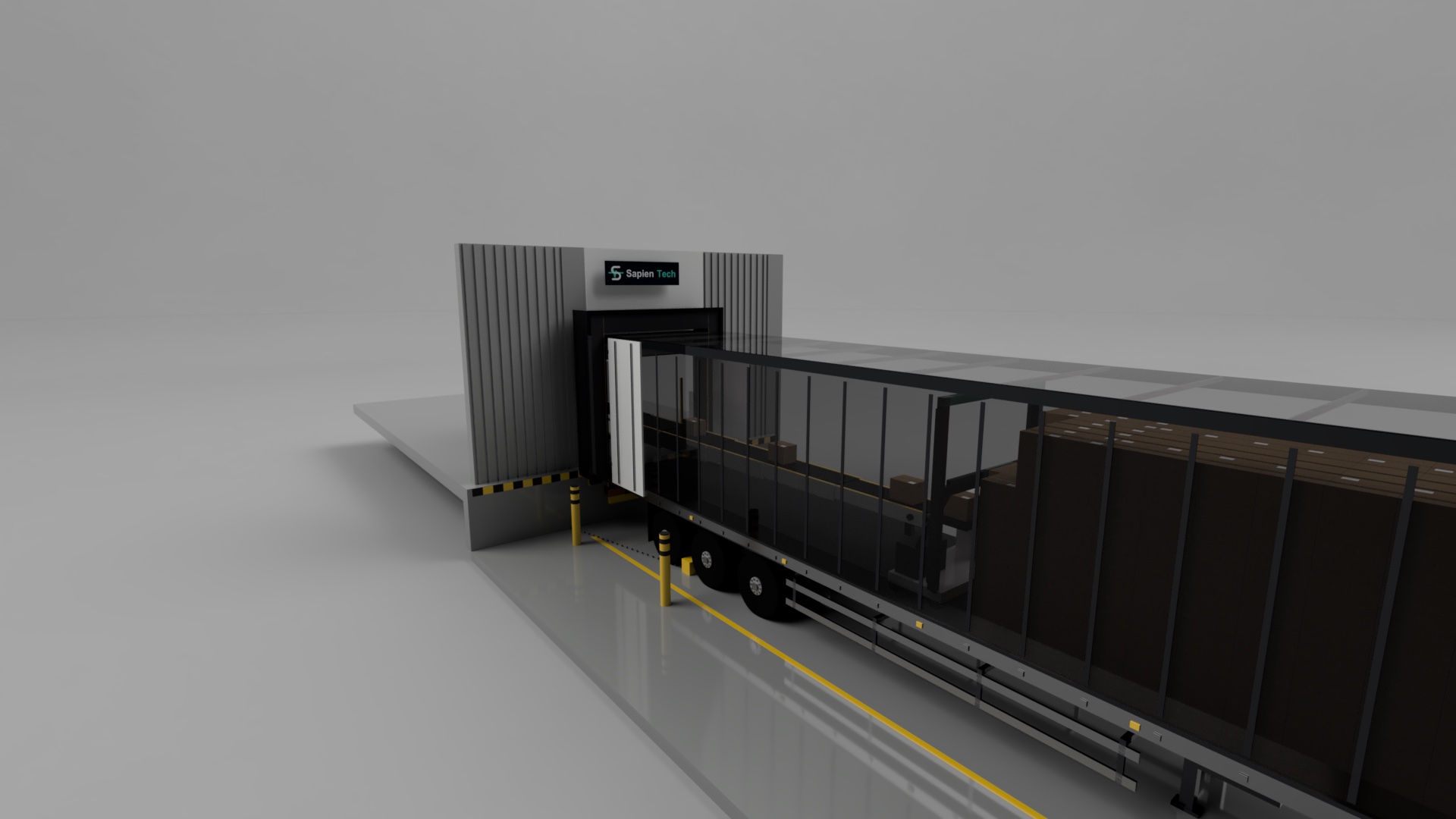
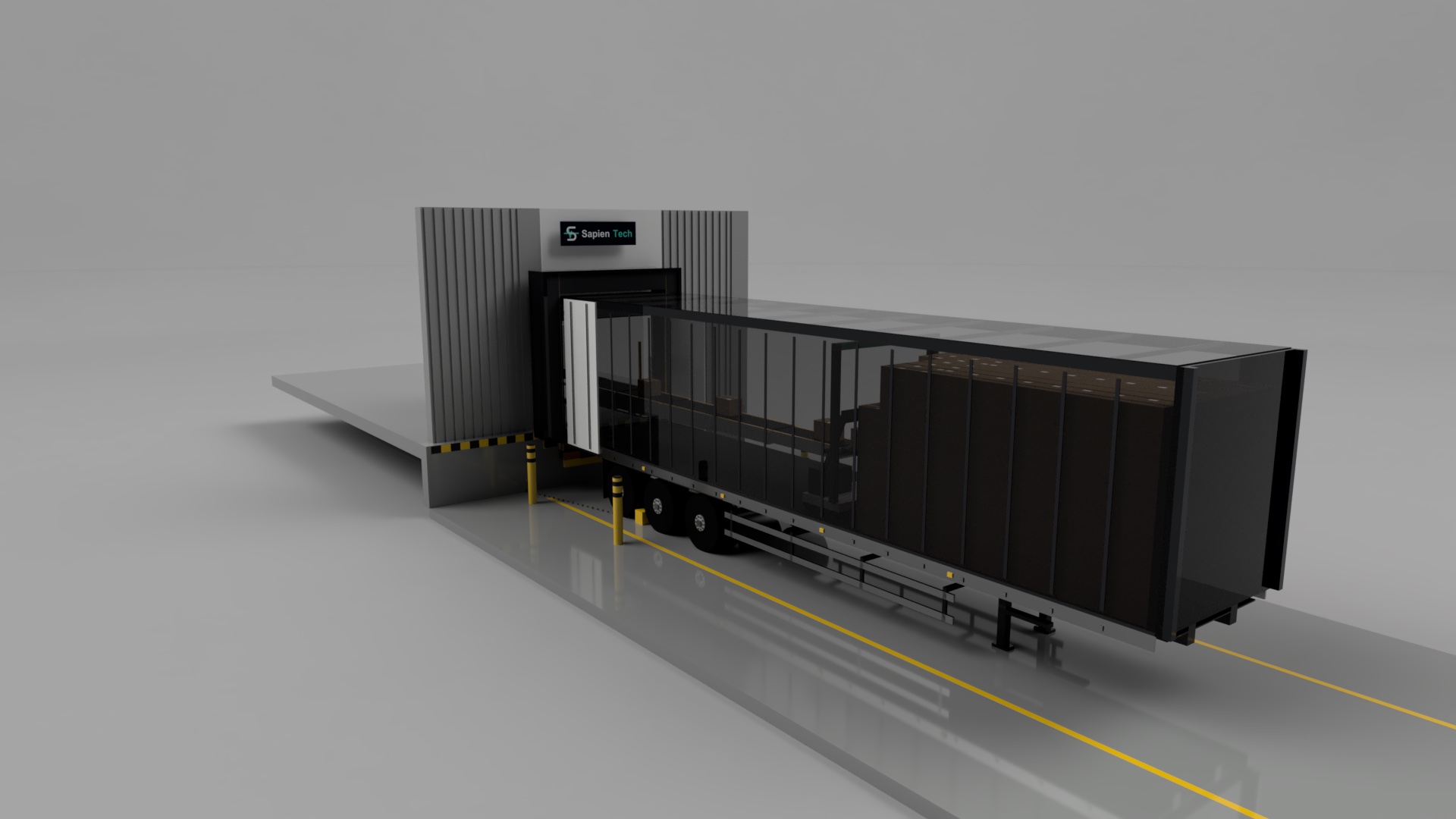
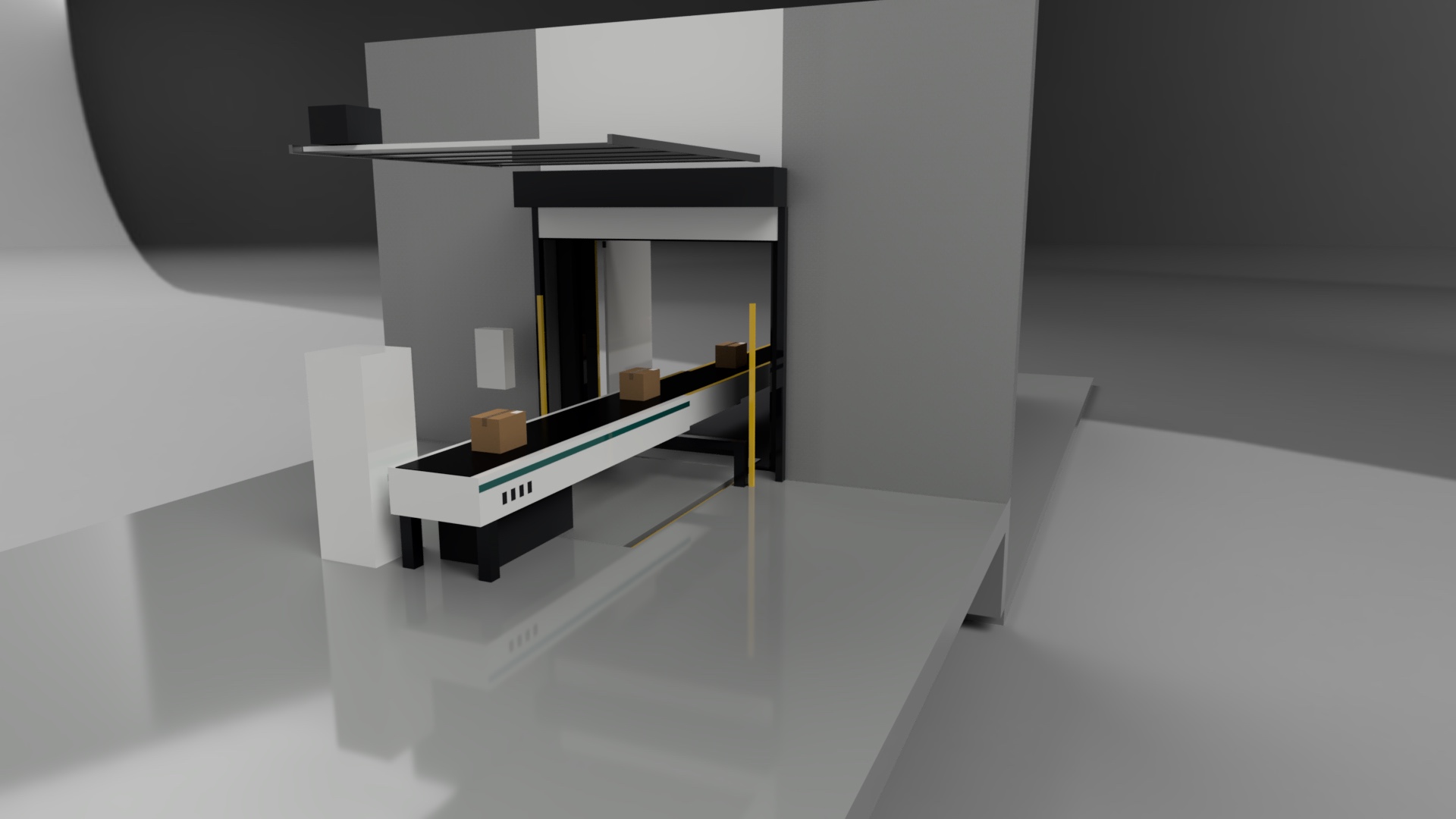
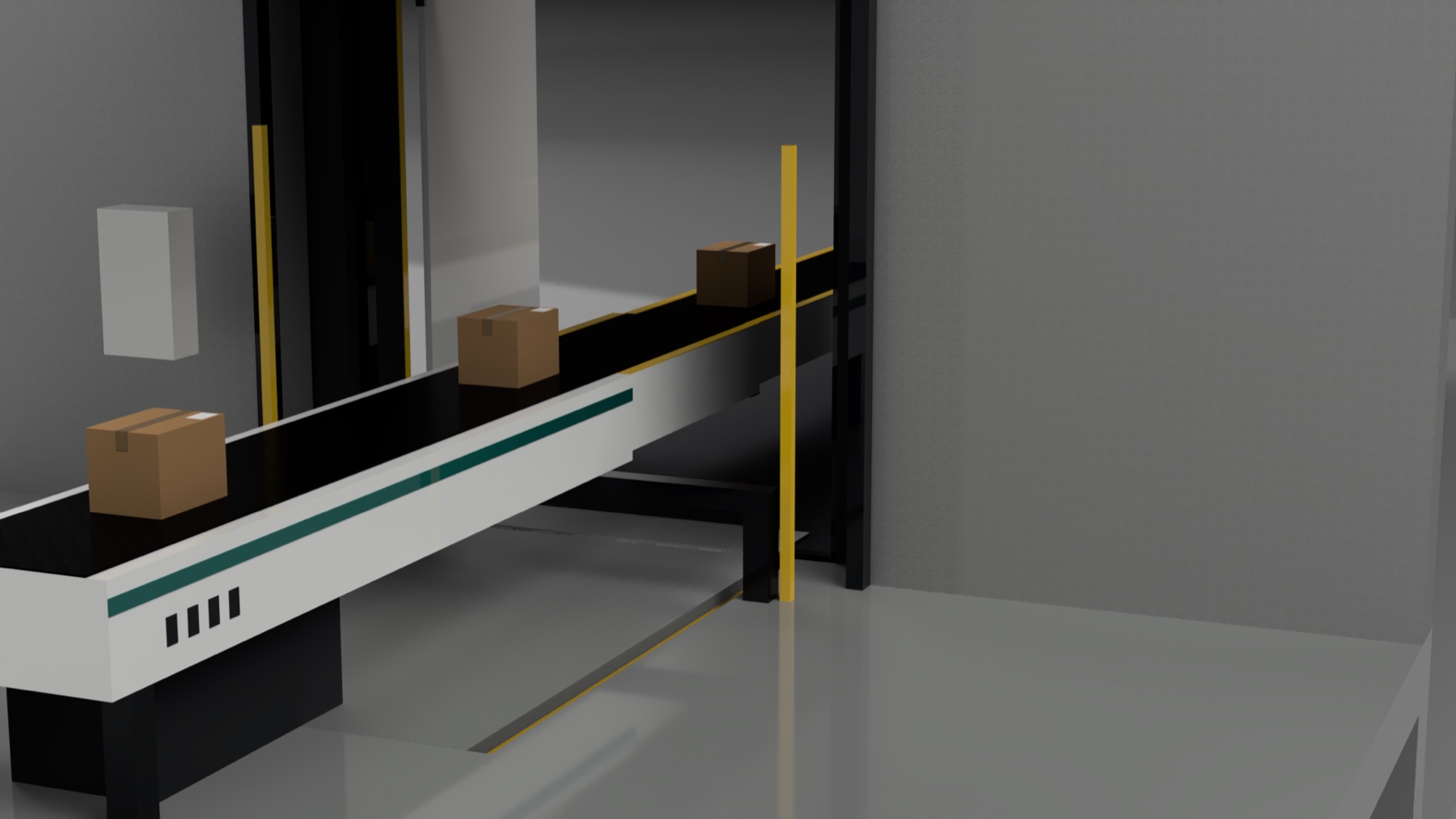
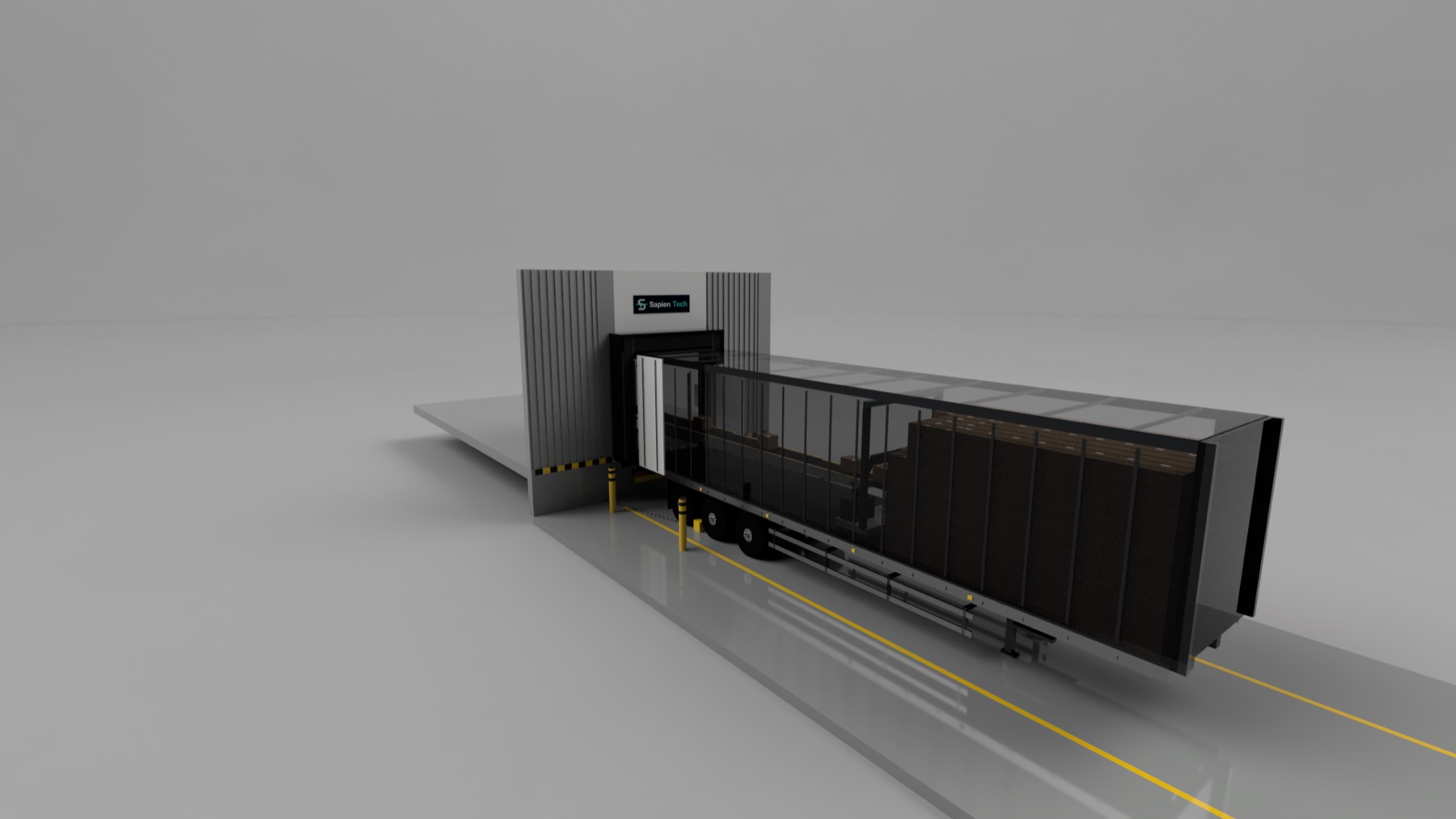
The trailer at the door. Cases into the building.
A curtain-sided trailer reversed onto a Sapien Tech dock door, and a belt conveyor carrying cases through the dock opening, rendered from the Fusion design model.
Concept · 3D design No physical testing yet; ratings are published only after testing.
Inside and outside the dock.
The same engineering model from inside the building, with the boom extending into the trailer, and from outside at the dock door.
- Boom reach
- 13.5 m
- Design rate
- 1,360 boxes/h, to prove on a test rig
- Per trailer
- about 88 min
Concept · 3D design Figures are design calculations from the Fusion model. No physical testing yet; ratings are published only after testing.
Tell us about your docks and trailers.
Share trailer types, loads per day and your dock layout.