Home / Maintenance
Maintenance by design. More time operating.
We design the route, the service access and the exchangeable part together. Sensors and AI-supported review help prepare the work; WCS manages available routes. The aim is shorter maintenance interruptions, with recovery measured for each configuration.
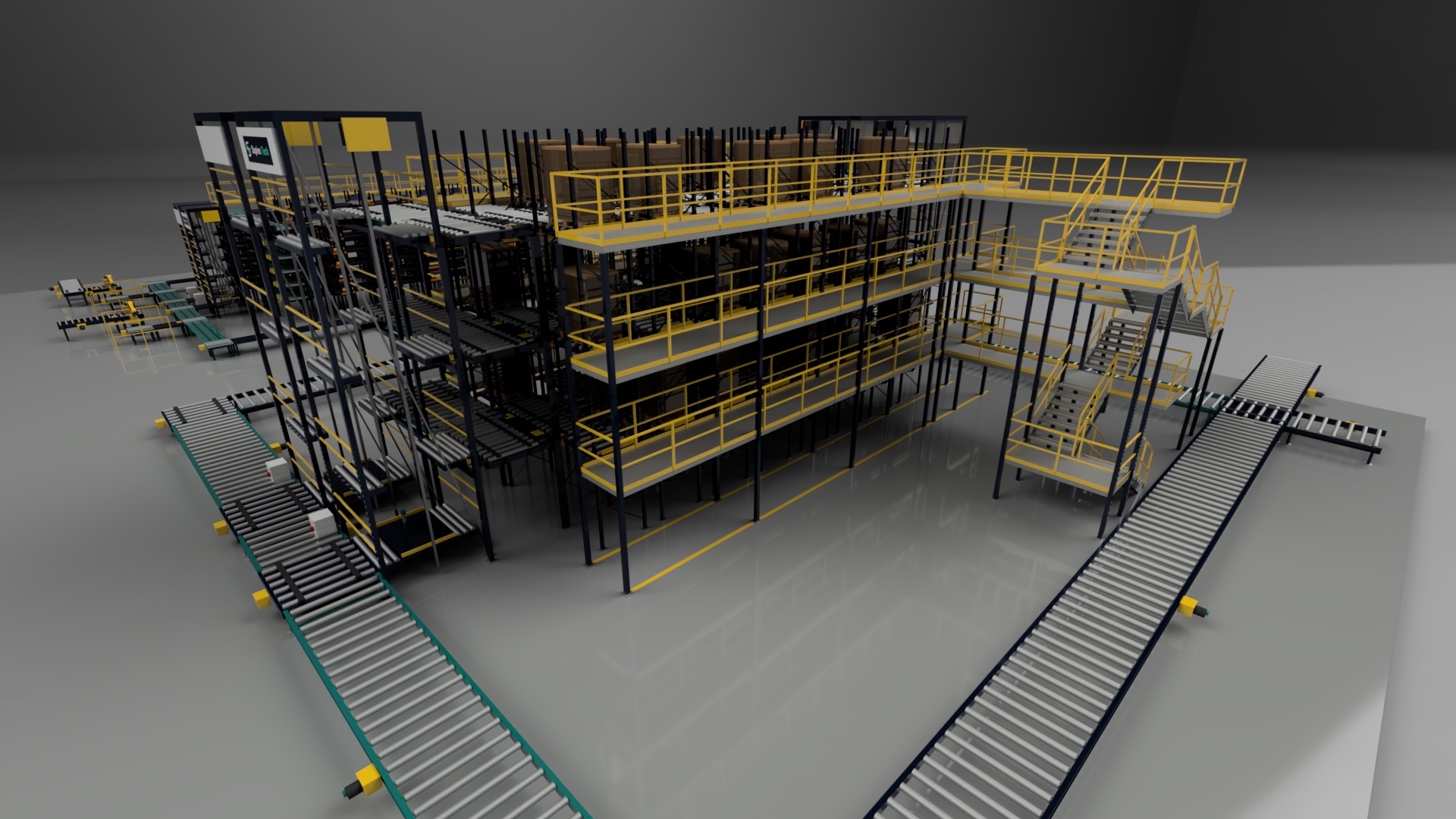
A module, an access route and a spare.
A quick-change label is not enough. Each equipment package needs removal space, supported handling, identified connections, a stocked spare and a repeatable return-to-service check.
| Equipment | Exchange planned in the design | Condition evidence | Recovery to define |
|---|---|---|---|
| Pallet storage and lifts | Accessible drive/brake package, shuttle wheel/drive module, removal beam or trolley and spare assembly. | Lift position, load, drive current, vibration, temperature and transfer occupancy. | Stop admission to the affected lift or lane, identify reachable slots and reserve a permitted route. The two one-way lanes retain their assigned directions. |
| Tote storage | Carrier, lift drive and sensor/electrical module reached from planned service points and level access. | Carrier identity, lane occupancy, lift encoder, motor condition and transfer timeout. | Preserve tote identity and destination; reserve permitted lane, lift and buffer resources. A blocked direction holds affected jobs unless a connected route is available. |
| Conveyors and sorting | Driven roller, belt-drive, bearing and sensor bracket modules with space to withdraw them. | Photo-eyes, speed encoder, belt tracking, motor current, vibration and temperature. | Prevent new releases into the isolated zone; reserve an installed cross-tie or approved manual route. |
| AMRs and AGVs | Wheel/drive package and approved battery module; service bay and immobilised-vehicle recovery plan. | Battery health, charging, drive condition, location confidence and docking events. | Reassign reachable work to available vehicles after the route and recovery boundary are confirmed. |
| Picking and truck handling | Gripper cups, vacuum module and indexed vision bracket; access and calibration checks planned together. | Vacuum level, item detection, grip confirmation, vision confidence and cycle events. | Hold uncertain loads; use another configured cell or staffed station with confirmed handling capacity. |
| WCS and monitoring | Managed controller/gateway replacement, configuration backup and a tested recovery procedure. | Heartbeat, timestamp, event sequence, communications health and data completeness. | Reconcile load identities and reservations before releasing work. No duplicate job or assumed successful transfer. |
These are requirements for the proposed equipment packages. The detailed design confirms the selected parts, tools, connections, safe handling and spare quantities.
From a sensor change to a controlled return.
Every finding refers to an asset, timestamp, operating state and supporting readings. AI suggests a review; it does not grant access or reset machinery.
Capture the evidence
Associate readings, alarms and transfer events with the exact asset and load. Missing or stale information is shown as unknown.
Prepare the work
A person reviews the AI-supported finding, inspection evidence, spare availability and proposed work window.
Reduce the affected flow
WCS stops new admissions and reserves a permitted physical alternative. It reports blocked stock and reduced capacity.
Use approved isolation
Authorised people follow the site procedure for hazardous and stored energy. Adjacent operation requires validated separation.
Swap, then repair
Use the defined handling method and identified spare. The failed module is diagnosed and repaired at the service bench.
Reconcile and release
Complete the required checks, confirm configuration and load positions, review fresh readings and release work under the approved procedure.
Five priorities for service.
They apply to tote storage, pallet storage, conveyors and AMRs.
- 1. Zones. Service zones are planned with access guarding and isolation. Continued operation elsewhere depends on validated separation from every hazard.
- 2. Service lanes. Service lanes and recovery points are part of the design. Recovering an immobilised robot needs an approved method and suitable equipment.
- 3. Swap, don't repair. A spare robot and transfer trolley are planned so repairs can take place at a controlled bench area.
- 4. Quick-change parts. Wheels, batteries, lift units, sensors and floor tiles are planned as replaceable modules. Access, tools and handling methods are confirmed during testing.
- 5. Predict first. Predict is intended to flag changes in motors, drives and bearings for review. Alerts support inspection and planning; they cannot guarantee that a failure is detected.
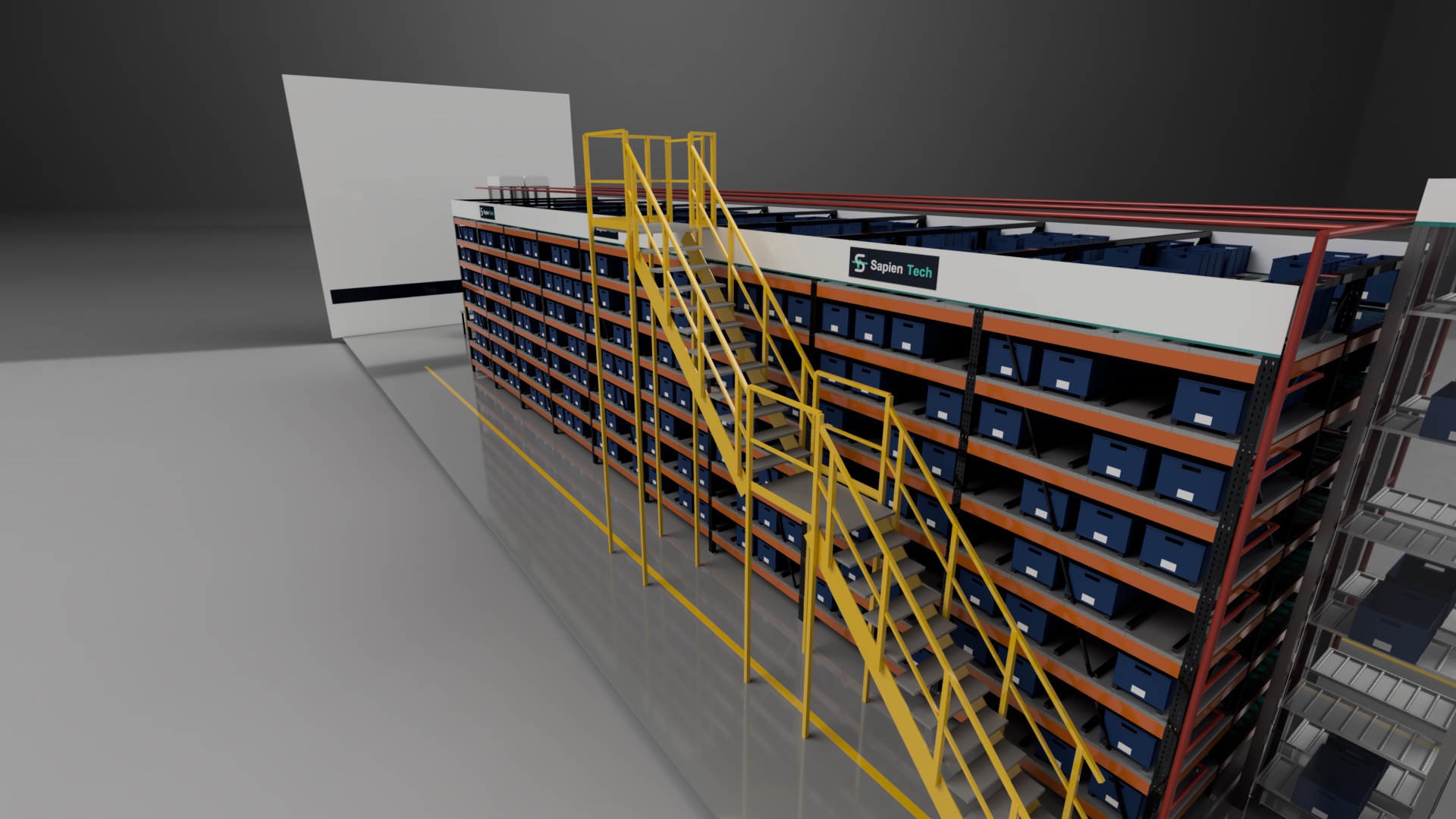
A separated service zone, shown in the model.
This product-level example shows tote zone B, both east loop units and their floor crews stopped. The two west loop units remain animated to illustrate the proposed service boundary. The turnkey review shows its own connected layout, levels and route-loss scenarios.
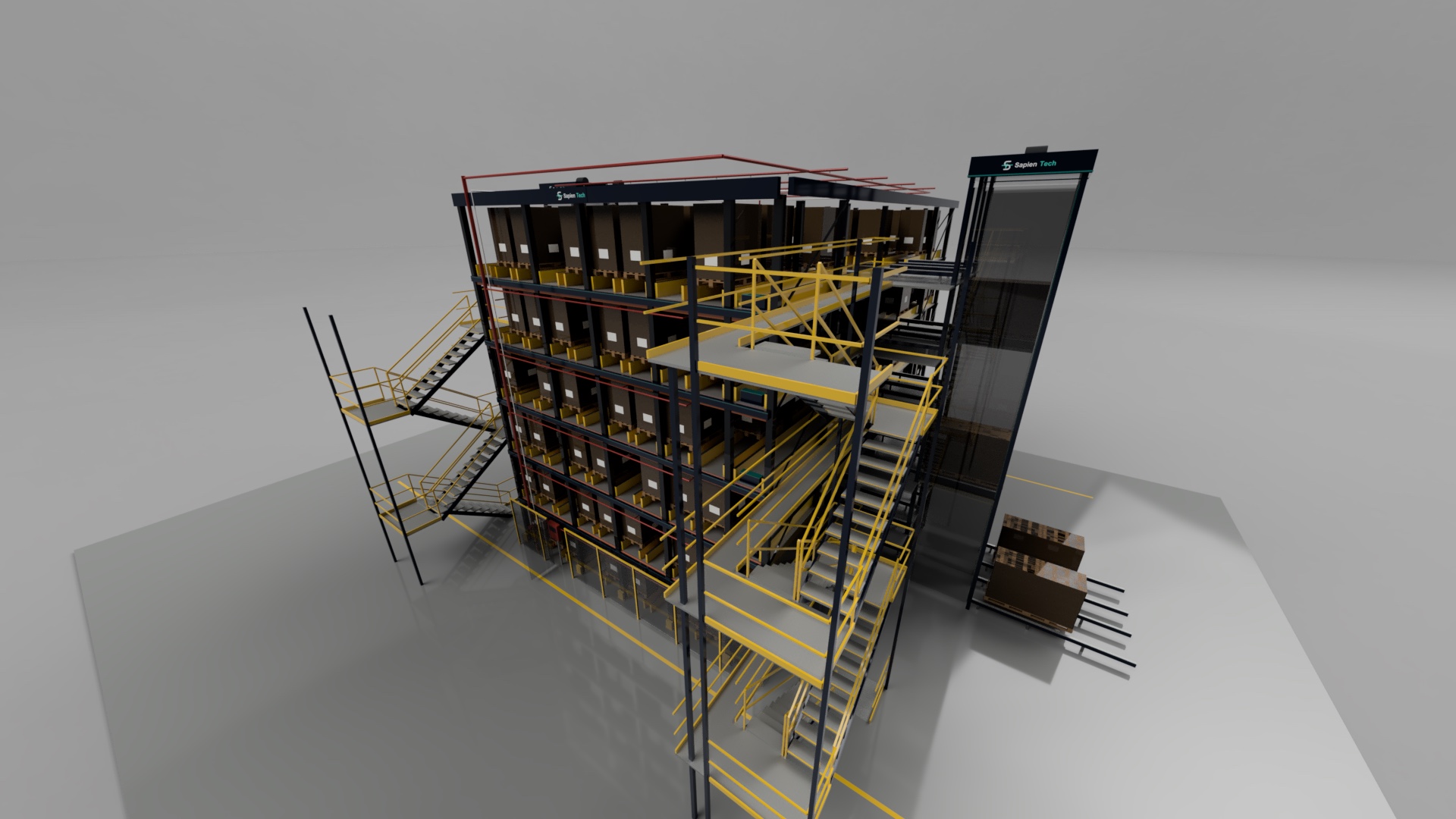
Pallet storage: zone A locked.
This product-level example shows pallet zone A and both west lift units stopped. It illustrates service separation, rather than proving that every stock location remains reachable during a fault.
Plan access and a controlled return.
Authorised, competent people must use the approved site-specific isolation and access procedure. A beacon, guard lock or software stop does not prove that hazardous energy is isolated.
Define the work
The approved method identifies the work area, recovery needs and all affected machines and interfaces.
Control hazardous energy
The site procedure must cover every hazardous energy source, including stored energy, and verification of isolation before access.
Validate the boundary
Adjacent operation is permitted only where the assessed and tested safety functions protect the work area. Otherwise the affected system stops.
Control the restart
The authorised release and restart procedure covers people, tools, guarding, lock removal and required checks. Resetting a safety device must not itself restart movement.
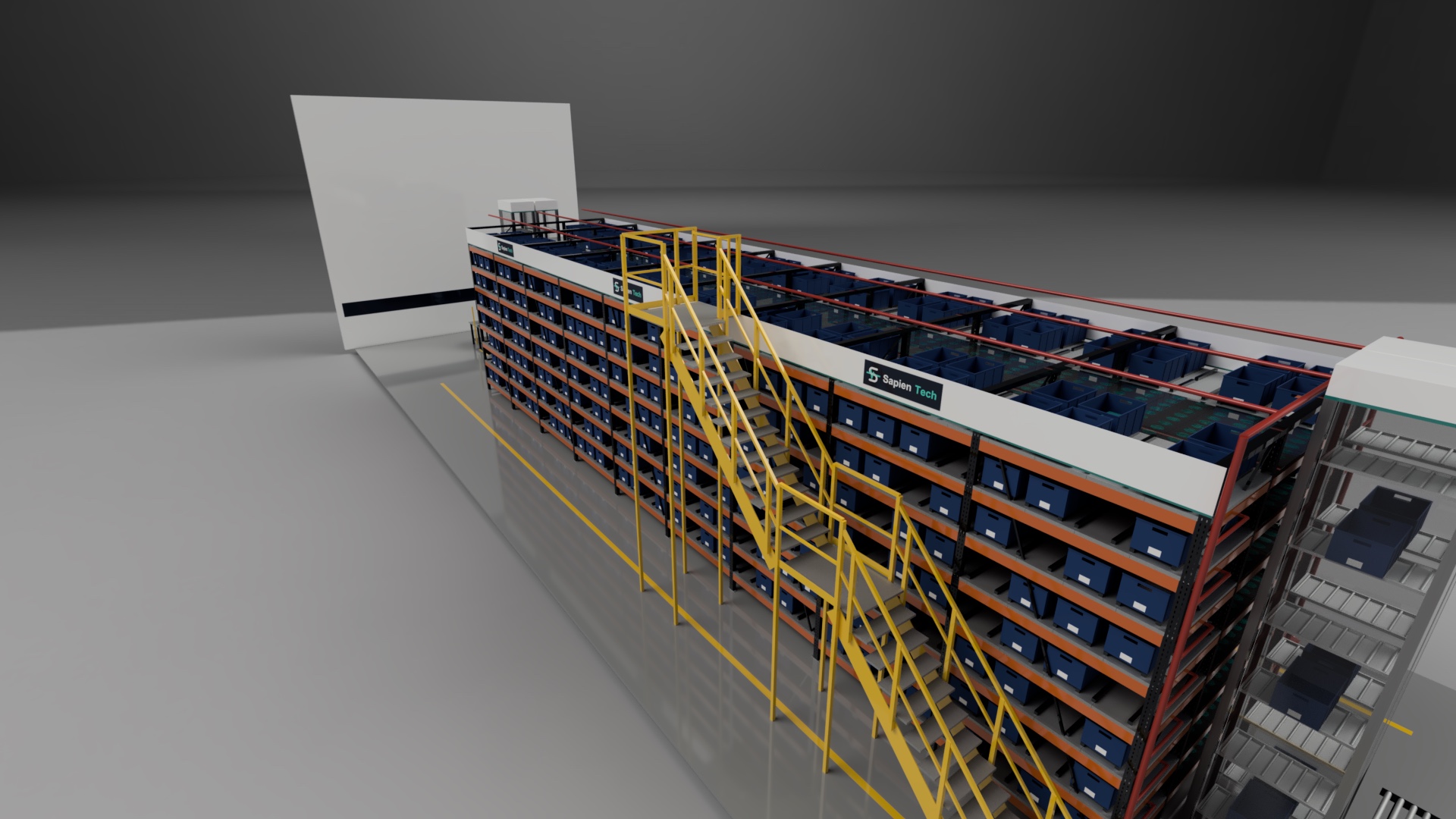
Stairs, walkways and handrails to every level.
Guarded stairs and service walkways around the pallet storage in the whole-site Fusion model, with conveyors running at floor level below.
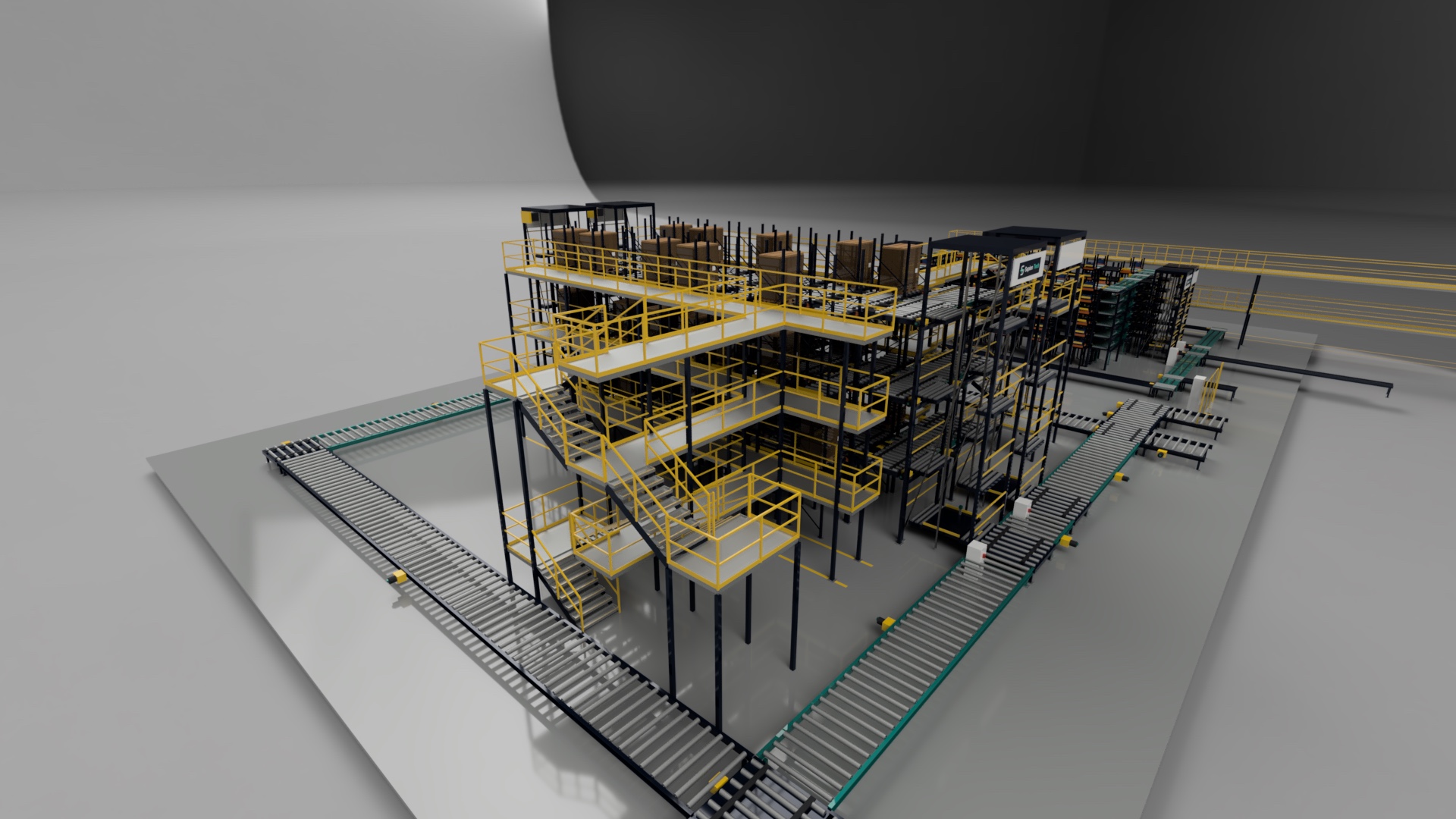
Concept · 3D design No physical testing yet; ratings are published only after testing.
An illustrative service plan.
Example activities only. The approved maintenance plan sets methods and intervals from the equipment, use and risk assessment. Swipe the table sideways on a phone.
| How often | Tote storage | Pallet storage | Conveyors & AMRs |
|---|---|---|---|
| Every day | Check alarms on the screen. Look at the port. | Check alarms. Look at lift chains. | Check alarms. Clear any debris. |
| Every week | Test e-stops and light curtains. | Test e-stops, light curtains and lift brakes. | Test e-stops. Clean scanners and photo-eyes. |
| Every month | Clean the floor and carrier sensors. Check loop chain tension. | Check robot wheels and decks. Check charge contacts. | Check belt tracking and swivel wheels. Check AMR wheels. |
| Every year | Full safety check of zones, doors and locks. | Full safety check. Lift load test. | Full safety check. Battery health check. |
| Always on | Predict is intended to flag abnormal trends for review; it does not detect every failure. | ||
Design for a smaller fault impact.
The alternatives below are proposed recovery paths. Capacity, isolation boundaries and failure behaviour need factory and site testing. A safety trip or common failure may stop a wider area.
| System | If this stops | Planned alternative, subject to validation |
|---|---|---|
| Tote storage | One loop lift or port | An available unit among the four loops and its port, where reachable routes and validated safety boundaries allow reduced operation. |
| Pallet storage | One of four independent lift units | Another permitted unit and level buffers, where reachable routes, safety boundaries and remaining capacity permit. |
| Conveyor and sorter | A diverter or a lane | A bypass and staffed manual sort station, if installed and approved for that fault. |
| AMR / AGV fleet | A robot | Available spare robots and alternative routes, subject to safe recovery and fleet capacity. |
| Truck loading | A dock loader | An available dock or approved manual handling route, subject to the load and site plan. |
| WCS software | A server | A redundant server, with failover and machine behaviour to be verified for the deployed configuration. |
Fewer parts, faster swaps.
Module exchange time is one part of the interruption. Access, isolation, testing and load reconciliation belong in the measured task too.
- Common spares. Shared motors, drives, sensors and controllers are a design aim. The final spares list follows the selected equipment.
- Swap, then repair. Define and test the exchange task with the spare, tools and handling equipment present. Repair the removed module on the bench; measure the full interruption as well as the exchange time.
- Work from outside. Catwalks, stairs and lift-out panels are intended to improve access. Work must remain outside hazardous areas unless the approved isolation method permits entry.
- Plan, don't react. Predict is intended to support condition-based inspection and planned work through vibration and temperature trends.
- Clear records. WCS is planned to record faults and service events. Record completeness and retention depend on the final configuration.
Prove the service outcome.
Measure the whole job, under normal operation and planned fault scenarios.
| Measure | What the acceptance trial records |
|---|---|
| Service access | Time from the approved stop request to verified access for the defined task. |
| Module exchange | Time at the workface, with the correct spare and handling equipment ready. |
| Full interruption | Access, exchange, checks, load reconciliation and release back to operation. |
| Reduced operation | Reachable destinations, queues, stopped zones and achieved flow on the remaining route. |
| Parts readiness | Spare identification, stock, configuration and replenishment after an exchange. |
| Repair quality | Post-repair checks, fresh condition evidence and repeated faults over the agreed review period. |
Numeric acceptance thresholds are agreed for each asset and operating case. No swap-time or availability result is claimed before the defined trial is completed.
Maintenance questions.
Do I need to stop everything to fix one robot?
Not necessarily. Continued operation depends on the fault, recovery method and validated safety separation. Some work will require a wider shutdown.
Who can do the work?
Competent, authorised technicians using the approved site procedure and task-specific training. Modules, tooling and handling methods are confirmed during development.
How do you know a part is wearing out?
Predict is intended to show changes in vibration and temperature for a person to assess. Detection and warning time depend on the fault and the validated measurement setup.
Tell us how you maintain today.
Share your shifts, team and current downtime. We will show how zones and swap-outs could help.